
Meta has made some of the most significant changes to its advertising platform in years. If you run campaigns on Facebook or Instagram, understanding these updates is no longer optional. Audience targeting in 2026 looks and behaves very differently from what most advertisers learned. This guide breaks down every major shift, explains why these changes happened, and shows you how to stay ahead.
What Exactly Changed in Meta Ads Targeting This Year
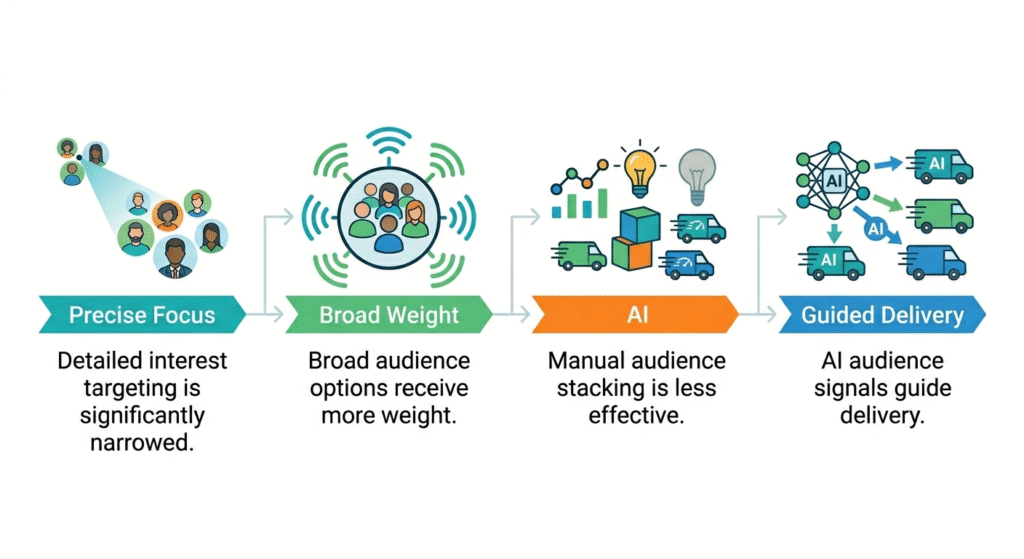
Meta rolled out a sweeping set of updates that affect how advertisers define, reach, and engage their audiences. The core shift is a move away from manual, interest-heavy targeting toward AI-driven, signal-based audience delivery.
- Detailed interest targeting has been narrowed significantly
- Broad audience options now receive more algorithmic weight
- Manual audience stacking is less effective than in previous years
- AI audience signals now guide delivery in most campaign types
Why Meta Introduced These Audience Targeting Updates
Meta made these changes in response to growing pressure from data privacy regulations, platform-wide policy enforcement, and user behavior trends that favor less intrusive advertising.
- Privacy laws across the EU, US states, and Asia-Pacific regions limited third-party data access
- App Tracking Transparency on iOS reduced signal availability
- Advertisers were over-segmenting audiences, leading to lower ad relevance
- Meta’s machine learning systems now perform better with fewer manual constraints
How AI Is Reshaping the Way Audiences Are Reached
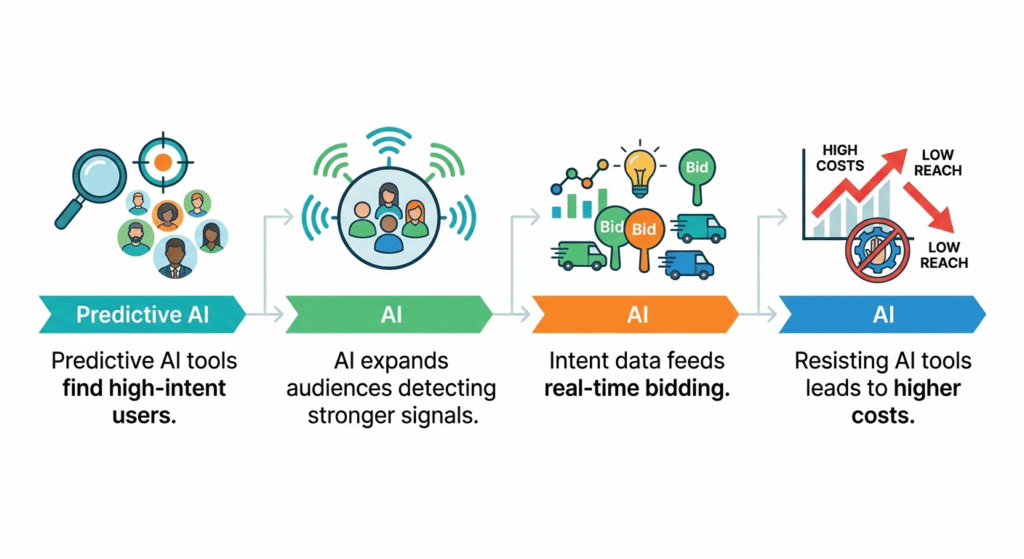
Artificial intelligence is now the engine behind most targeting decisions inside Meta’s ad platform. Machine learning ads analyze behavioral patterns, engagement history, and conversion signals to determine who sees your ads and when.
- Advantage+ audience tools use predictive targeting to find high-intent users
- AI expands defined audiences when it detects stronger conversion signals elsewhere
- Customer intent data feeds into real-time bidding and delivery decisions
- Advertisers who resist AI-assisted targeting often see higher costs and lower reach
How Interest-Based Targeting Has Evolved
Interest targeting, once the backbone of Facebook Ads strategy, has been restructured. Meta removed hundreds of sensitive interest categories in early 2026 and tightened how remaining interests map to actual user behavior.
- Interests now reflect active behavioral patterns, not just page likes
- Fewer niche interest combinations are available to advertisers
- Broad match delivery has become the default for many campaign objectives
- Interest targeting works best when layered with first-party data signals
What Privacy-First Advertising Means for Your Campaigns
Privacy-first advertising is not a trend anymore. It is the new foundation of digital marketing. Meta has redesigned its targeting infrastructure around consent-based data collection and privacy-safe measurement.
- The Conversions API has replaced pixel-only tracking for most use cases
- Aggregated event measurement limits the number of trackable events per domain
- Off-platform data usage has been restricted under updated terms
- Transparency tools now show users more about why they see specific ads
Why First-Party Data Has Become Essential
First-party data is now the most valuable asset in any Meta advertising strategy. As third-party signals fade, advertisers who own their data have a serious competitive advantage.
- Customer lists from email, CRM, or purchase history feed directly into custom audiences
- Website and app event data via the Conversions API strengthens audience matching
- First-party signals improve lookalike audience accuracy significantly
- Brands without a data collection strategy will struggle with ad personalization at scale
How Lookalike Audiences Work Differently in 2026
Lookalike audiences still exist, but the way they function has been updated. Meta now uses broader behavioral modeling instead of strict demographic similarity, which changes how these audiences perform.
- Lookalikes generated from high-quality first-party data outperform older seed lists
- Smaller lookalike percentages do not always mean better performance anymore
- Meta recommends combining lookalikes with Advantage+ for improved reach
- Refreshing seed audiences regularly improves lookalike accuracy over time
What Impact These Updates Have on Advertisers
The impact of these updates is felt across campaign structure, budget allocation, and creative strategy. Advertisers who relied heavily on narrow audience targeting have seen performance shifts.
- Campaigns using overly tight audience definitions face limited delivery
- Broad targeting with strong creative often outperforms segmented approaches
- SMM professionals are restructuring full-funnel strategies to align with new delivery logic
- Reporting changes mean some conversion metrics are modeled, not exact
How Businesses Can Actually Benefit From These Changes
Despite the disruption, these updates create real advantages for businesses willing to adapt. The new system rewards relevance, quality, and data ownership over manual audience manipulation.
- Brands with strong creative assets benefit from AI-powered ad delivery
- First-party data strategies create defensible targeting advantages
- Automation tools reduce manual workload while improving campaign optimization
- Businesses using the Conversions API see better attribution and lower cost per result
Common Mistakes Marketers Should Avoid Right Now
Some advertisers are responding to these updates in ways that make performance worse. Knowing what not to do is just as important as learning new strategies.
- Stacking too many interest layers still limits delivery and raises costs
- Ignoring Advantage+ features in favor of manual settings reduces scale
- Not implementing the Conversions API leads to data gaps and poor optimization
- Skipping creative testing means the AI has less material to work with
What the Future of Audience Targeting on Meta Looks Like
The direction is clear. Meta is moving toward a system where advertisers define goals and budgets, and the platform handles delivery through AI and behavioral signals. This shift is already underway.
- Contextual signals and on-platform behavior will replace most third-party data inputs
- Predictive targeting models will become more accurate as more campaign data feeds the system
- Privacy-compliant measurement solutions will replace traditional pixel tracking
- Advertisers who invest in first-party infrastructure now will have a long-term edge
How to Optimize Campaigns for Better Performance Under the New System
Adapting your strategy to fit the 2026 targeting environment requires specific action steps. The following practices are aligned with how Meta’s delivery system now works.
- Use broader audience definitions and let the algorithm optimize delivery
- Build strong creative variations so the system can test and learn faster
- Implement the Conversions API alongside your pixel for redundant signal coverage
- Regularly update custom audience lists to keep your data fresh and accurate
- Allow campaigns enough budget and time to exit the learning phase before drawing conclusions
Conclusion
Meta ads targeting in 2026 is built on AI, first-party data, and privacy-compliant infrastructure. The advertisers who are winning right now are not the ones trying to outsmart the algorithm. They are the ones giving it the right inputs: quality creative, clean audience data, and clearly defined conversion goals. Whether you are running ads for a small business or managing accounts for multiple clients, the fundamentals have changed. The sooner your strategy reflects that, the better your results will be. Digital marketing success in this environment depends on staying adaptive, investing in owned data, and trusting the tools Meta has built around machine learning and automation.